Friday, 26 April 2013

Wildlife photography

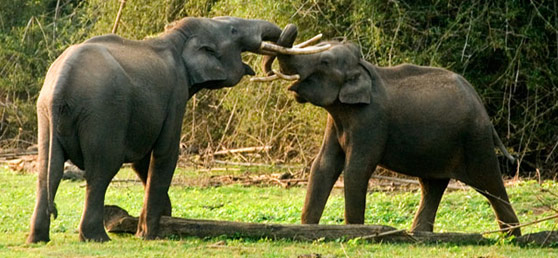
Wildlife photography is regarded as one of the more challenging forms of photography. As well as needing sound technical skills, such as being able toexpose correctly, wildlife photographers generally need good field craft skills.
               The beautiful state of Kerala is blessed with exotic jungles turned into wildlife sanctuaries and national parks that foster some of the best species in the world. Plan a wildlife tour of Kerala and explore some of the great wildlife hubs.

The jungles of Kerala are very popular for a varieties of species of flora and fauna. Plan a wildlife tours to some of the best preserved wildlife sanctuaries in the country and sight some of the most ferocious animals in their natural habitat. The most popular wildlife national parks in Kerala are -


1. Periyar Wildlife Sanctuary - Claimed to be the domain of the tigers, Periyar Tiger Reserve is located around 55 kms from Coimbatore and is easily accessible from all over the state. The wildlife park is famous for tigers and elephants while tourists can also sight Lion-Tailed Macaques, Great Indian Hornbill, Nilgiri Laughing Trush and Ceylon Frog Moth. Boating, Jeep safari and elephant safari are a few exciting adventure options that one should not miss. The best time to visit this wildlife hub is from the months of September to March. Park is open for public visit from 6 am to 6 pm. Boat safaris can be taken inside the park and its timings are 7, 9, 11 am & 2 and 4 pm. Entrance fee is Rs 25 for Indians and Rs 300 for foreign nationals. Other charges includes Cameras  Rs. 25 (still) & Rs. 200 (video), Vehicle entry - Rs. 50, Boat ride - KTDC Rs. 110 (upper deck), Rs. 55 (lower deck), Rs. 350/trip for a small 2 seater boat.

2. Idduki National Park - At a distance of 40 kms from Thodupuzha, sprawls the Idduki National Park famous for its rare species of migratory birds and various options of safari offered inside the park. Visit during the months of September and October when the adjoining Idduki Arch Dam is flooded with water and creates a ethereal ambiance. park is open from 7 am to 5 pm and entrance fee is Rs 15 for Indian and Rs 200 for foreigners. There is a forest bus that charges Rs 20 per head to take around the wildlife park.

3. Kumarakom Bird Sanctuary - Idyllically located on the banks of Vembanad Lake, tourists come here to enjoy bird watching some exclusive and rare species of avian family. Some of the most exotic birds one can sight here are Siberian Cranes, Egrets, Flycatchers, Teals and Herons Water Ducks. Motorboats rides and houseboat cruises can also be enjoyed here. The bird sanctuary is just 16 kms form Kottayam and can be visited during the months of November to February. The Kumarakom bird sanctuary is open for public from 6 in the morning till 6:30 in the evening and charge Rs 5 (Indian) and Rs 45 (foreigners) as entrance fee. 


4. Silent Valley National Park - It is one of the most beautiful wildlife parks in India flooded by colorful birds and beautiful butterflies. It is located around 40 Kms from Mannarkkad and can be visited from September to March.Tourists can enjoy elephant as well as jeep safari to see animals like Lion-Tailed Macaques, Tigers, Great Indian Hornbill, Nilgiri Laughing Trush, Ceylon Frog Moth. Tourists are allowed inside the park only from 8 am to 2 pm as it takes approximately one and a half hours to reach the valley. To go inside the park vehicles can be hired from MUkkali. Their charges are Rs 650 for the vehicle. Entrance charges are Rs 50 per head and guide takes around Rs 150. While vehicle entry is Rs 250, they charge another Rs 50 for still camera.


5. Wayanad Wildlife Reserve - Some of the animals that tourists can enjoy sighting here are Elephant , Bison, Spotted Deer, Tiger, Leopard, Bear and Wild Boar. Best visited during June to October, it is located just 110 kms from Calicut and easily accessible from all over the state. The park timings are from 6 am to 9 am and then from 3 pm to 6 pm. Entrance fee is Rs 10 for Indiana nationals and Rs 100 for foreigners. Camera charges are Rs 150 while guides charge Rs 200. One can also hire a jeep to go inside that park that cost Rs 250.  


Kerala, the land of God, is a beautiful patch of green that is covered with jungles and woods, thus providing excellent habitat for a variance of fauna. Besides the above mentioned wildlife hubs, there are many other parks that deserve special mention. Some of the lesser known but equally abundant wildlife parks in Kerala includes Peppara Wildlife Sanctuary, Nayyer Wildlife Sanctuary, Thattekkad Bird Sanctuary, Eravikulam National Park and Nagarhole Wildlife Sanctuary.

10 best boat journeys

10 best boat journeys


Boats are often overlooked as a way to see the world; we invariably have limited time to get from A to Z so we fly, missing B to Y. In a lot of cases, though, boats are the best, and frequently the only way, to properly see a destination. Here are ten of the best boat journeys the world has to offer.


1. Fjords, Norway


For more than a century, Norway’s legendary Hurtigruten ferry route has linked the numerous coastal villages and towns. Year-round, 11 modern ferries head north fromBergen, reaching Kirkenes before returning. Take the 11-day round-trip that pulls in to 34 ports and offers various opportunities for side-trips, or just cruise a stretch (or two) of this trip. Features on the full itinerary include fabulous fjords and islands that see the midnight sun, medieval monasteries and Art Nouveau towns.

2. Halong Bay, Vietnam


Bobbing on the emerald waters of Halong Bay and moving through its 3000-odd limestone islands is simply sublime. The tiny islands are dotted with beaches and grottoes created by wind and waves, and have sparsely forested slopes ringing with bird tunes. There are more than 300 boats based at Bai Chay Tourist Wharf waiting to sweep you away to the World Heritage waters. Day tours last from four to eight hours, though (recommended) overnighters are also available.

3. Amazon River, South America


From its inconspicuous source in the Peruvian highlands to its mouth near Belém inBrazil, the Amazon River measures more than 6,200km (3,853mi). Its flow is 12 times that of the Mississippi, and it carries one-fifth of the world’s fresh water. String up a hammock on a slow boat (of varying quality) between Manaus and Belém in Brazil orTrinidad and Guayaramerín in Bolivia. Its edges are crowded with jungle or settlements, and your slow boat can take anywhere from four to six days.

4. Franklin River, Australia


Not for the faint-hearted, rubber-rafting down the wild Franklin River is a challenging and, at times, treacherous undertaking. The isolated wilderness of Tasmania’s World Heritage area protects ancient plants and endemic creatures. Accessing it by boat can only be done between December and March, and requires eight to 14 days – only experienced rafters are eligible. Rafters usually access the unpredictable river – given to fits of flooding – at Collingwood River (49km or 31mi west of Derwent Bridge) and finish at Gordon River, having prearranged a pick-up.

5. Quetico Provincial Park, Canada


Paddling along the glassy surface of Northern Ontario’s pristine lakes puts you smack in the middle of the Canada‘s signature wilderness. Combine canoeing and camping to spot moose mooching at the water’s edge or drop a line for a spot of sport fishing. The 4,800-sq-km (1,853-sq-mi) park is known for its remote canoe routes (1,500km, or 932mi, of them), and there are opportunities for guided and self-guided forays in and around the park.

6. Kerala’s backwaters, India


The network of lagoons, lakes, rivers and canals that fringe the coast of Kerala make for some fascinating explorations. The basic little wooden boats cross shallow, palm-fringed lakes studded with cantilevered fishing nets, and travel along shady canals. A popular eight-hour cruise runs between Alappuzha and Kollam (also called Alleppey and Quilon), which includes a landing at the Matha Amrithanandamayi Mission – the residence of one of India’s very few female gurus.

7. Milford Sound, New Zealand


You don’t have to go far to see why Milford Sound is the most visited fiord on New Zealand‘s South Island. Sheer, weathered walls dominate the serenity here that’s often doused with rains. Cruises run for an hour or two, and depart from a huge wharf – a five-minute walk from the car park. Choose to sail or motor among the spectacular valleys looking for glimpses of the area’s endemic wildlife, such as hoiho or yellow-eyed penguin. Overnight cruises are also worth considering, with boats sailing the full 22km (14mi) length of the Sound and offering kayaking trips to shore.

8. Island-hopping, Greece


With more than 1,400 islands, Greece has more coastline than any other country in Europe. So it makes sense to hop between at least a few, as the scenery varies dramatically: from the semi-tropical lushness of the Ionian and Northeastern Aegean Islands to the bare, sunbaked rocks of the Cyclades. Every island has a ferry service of some sort ranging from the giant ‘super ferries’ that work the major routes, to the small, ageing open ferries that chug around the backwaters.

9. Disko Bay, Greenland


The town of Ilulissat perches at the edge of a 40km (25mi) ice fjord that produces 20 million tonnes of ice per day. To cruise among the bergs is truly amazing. The bluestreaked giants bob about the bay, with their true bulk concealed beneath the surface of the water – seven eighths of larger bergs typically lie out of view. A number of tour operators offer boat cruises around the ice fjords and the Bay in well-equipped vessels.

10. Galapágos Islands, Ecuador


Get on board the wilderness experience of a lifetime by cruising the haunting beauty of the Galápagos Islands – 1,000km (620mi) from mainland Ecuador. Here you can swim with sea lions, float nose-to-beak with a penguin and stand next to a blue-footed booby. Live-aboard boats range from small yachts to large cruise ships, with the most common variety being the motor sailer (a mediumsized motor boat), which carries up to 20 people and cruises for anywhere from three days to three weeks.


Travellers Guidelines for Responsible Tourism


Tourism is today recognized as a social phenomenon which brings mankind closer to different social values, cultural heritage and customs. Successful tourism development imbibes the values of recognising the sustainability of natural resources and the socio-cultural ethos of the land.
Kerala has inculcated several measures to be followed by tourists to sustain the pristine beauty of God’s Own Country and to conserve and protect its natural bounty. The focus of promotion of tourism in Kerala is channelised with a vision that aims at sensitising and educating tourists/visitors on various measures that has to be followed to preserve God’s gift to man – Nature.
The importance of responsible tourism based on conservation-preservation is the key to Kerala’s tourism policies and this is made evident in the guidelines set by Kerala Tourism for tour operators and the tourists who visit this land that has lured travellers through the centuries.

Travellers Guidelines for Responsible Tourism

  • Do an in-depth research on the customs and practices of God’s Own Country before you plan your visit
  • Appreciate the culture of the land and its tradition
  • Be polite to the native people and appreciate their habits
  • Learn a few basic words of greetings and polite phrases in the native language before your visit
  • Respect the diverse religious and social customs of Kerala
  • Observe the local laws and codes of the land.
  • Try to actively involve yourself in the cultural and environmental concerns of Kerala and cooperate accordingly
  • Avoid trying to purchase or own things which are not legally permissible or might be protected
  • Do not force entry into prohibited or restricted areas that will disrupt the ecology or the cultural sentiments of the land
  • Conserve energy by minimising the use of fans, lights, geysers etc. whenever not required
  • Avoid overuse, wastage and pollution of water, contributing to the global conservation of water resources
  • Avoid littering public places and ensure that waste is disposed only in bins earmarked for the purpose
  Pre-Departure Guidelines for visitors to Sanctuaries
  • Maximum size of visitors group for trekking will be 9
  • Guests shall not bring pets, i.e. dogs, cats etc. inside any park or reserve
  • Do not collect any form of fauna or flora from any sanctuary or park
  • Be aware of the negative aspects of insensitive behaviour, such as taking photographs of people without their consent or failure to observe local customs
  • Do not interfere with scientific research, facilities or equipment
  • Be aware of your capabilities and the dangers posed by the trip
  • Dress codes to be followed
  • Do not damage plants – for example by walking, driving, or landing on extensive moss beds or lichen-covered areas
  • Keep noise to the minimum to avoid frightening wildlife
  • Do not bring non-native plants or animals into the park
  • Be aware of the location of areas that have been accorded special protection and of any restrictions regarding entry and activities that can be carried out in and around the area
  • Be aware of applicable restrictions and regulations of the site
  • Do not damage, remove or destroy historic sites or monuments, or any artifacts associated with them
  • Please ensure that necessary permission is obtained before visiting
  • Maintain a safe distance from all wildlife
  • Do not stray from group
  • Do not disturb any animal by making noises, flashing lights or making any sudden movements that may frighten animals
  • Do not chase animals
  • Be aware that too much noise disturbs the wildlife and can antagonize other visitors
  • Do not damage vegetation or any fencepost, gate or signpost in the park
  • Be aware that plant damage can be irreplaceable resulting in loss of feeding and breeding grounds
  • Do not remove flora and fauna. Removal of these seriously disrupts the ecosystem and is illegal
  • Do not buy animal products as souvenirs as this encourages further plundering of these species
  • Always remain inside your accommodation at night
  • Be aware that the animals are wild and can be dangerous
  • Do not remain in the parks or reserves between 7 pm & 7 am unless accommodation is provided
  • Do not discard any foodstuff or litter the land and water bodies
  • Do not hand-feed fish and animals
  • Do not feed, touch or handle birds and animals; do not approach or photograph them in ways that may cause them to alter their behaviour
  • Take special care when animals are breeding or moulting

Jungle Rules – General Do’s and Don’ts

  • Total silence and discipline is required to spot wild animals
  • Small groups are preferred
  • Early mornings and late afternoons are the ideal time to visit forests
  • Travelling alone is prohibited especially in the Elephant Reserves
  • Do not wear colourful clothes or perfumes. Khakis, browns and greens are best suited
  • Always carry drinking water, tea/coffee, snacks etc.
  • Seek the assistance of a forest guard while going into the forests
  • Do not disturb or tease animals
  • Trekkers are advised to use jungle boots to ensure safety
  • Carry a first aid kit with medicines for common ailments
  • Avoid smoking
  • Radios and tape recorders are to be avoided
  • Do not litter the surroundings
  • Respect animals and their habits
  • Do not remove anything from the Sanctuary
  • Carry a note pad, flash light, road maps, bus, train and airline time-tables
  • Do not try to explore unfamiliar things
  • Be careful during boat rides. Don’t do anything that will rock the boat or endanger lives
  • Do not expect to see animals all the time. Be patient

Ayurveda Health Centres

  Ayurveda Health Centres Classified by Kerala Tourism

   Procedure for including the details of Classified Ayurveda Centre in this section
Kannathur Mana Ayurveda Heritage Resort  [Olive Leaf]
Thrissur
Alappuzha
Lake Palace  [Green Leaf]
info@lakepalaceresort.comChungam
Peace Cottage  [Olive Leaf]
atpeacew@yahoo.comMuhamma
Ernakulam
Ayurmana Spa  [Green Leaf]
reservation@cheraibeachresorts.comVypeen Island
Saj Earth Resort  [Green Leaf]
Nedumbaserry
Soma Kerala Palace  [Green Leaf]
mail@soma.inChempu
Ayurdara  [Olive Leaf]
ayurdara@gmail.comVypeen Island
CKKM Pharmacy  [Olive Leaf]
contact@rcmhealth.inThripunithura
Idukki
Kannur
Kasaragod
Rejuve - The Spa  [Green Leaf]
bekal@thelalit.comBekal
Kollam
Kottayam
Amba Ayurveda Hospital  [Green Leaf]
Changanassery
Ayurkshethra Temple of Life  [Green Leaf]
crs@eastend.inKumarakom
Ayurmana  [Green Leaf]
klresort@vsnl.comKumarakom
Madukkakuzhy Vaidyasala  [Green Leaf]
info@ayurmahc.comKanjirappally
Vedasparsh  [Green Leaf]
backwaterripples@vsnl.netKumarakom
Ayur Lakshmi  [Olive Leaf]
lakshmihotels@live.comKumarakom
Kozhikode
Malappuram
Palakkad
Pathanamthitta
Vedagram  [Green Leaf]
Pathanamthitta
Kondody Ayurvedic Clinic   [Olive Leaf]
Kumily
Thiruvananthapuram
Coconut Bay Beach Resort  [Green Leaf]
Vizhinjam
Soma Palmshore Beach Resort  [Green Leaf]
mail@soma.inLighthouse Beach, Kovalam
J. V. Ayurveda Bhavan  [Olive Leaf]
mail@ayurvedabhavan.comChettikulangara, TVM
Thrissur
Ayuryogashram Pvt. Ltd.  [Green Leaf]
info@ayuryogashram.comVadakkancherry
Nattika Beach Ayurveda and Yoga Centre  [Green Leaf]
Nattika
Rajah Island  [Green Leaf]
ayurcenter@ayurveda-in.comChavakkad
Vishnu Gardens & Resorts   [Green Leaf]
info@vishnuresorts.comChittilappilli
Kerali Ayurvedic Nursing Home  [Olive Leaf]
keralaiayur@gmail.comWarriam Lane, TCR
P. N. Ayurvedashram  [Olive Leaf]
mail@pnayurvedasramam.comKodugalloor
Sawparnika Ayur Bhavan  [Olive Leaf]
sreechandran@live.comIrinjalakuda
Vinayaka Ayurvedic Nursing Home  [Olive Leaf]
Palakkal
Wayanad